How to Identify Wild Garlic (Ramsons) and Avoid Its Toxic Lookalikes
Wild garlic, or ramsons, is one of the first green rewards of spring. Its leaves carpet damp woodland floors from late winter into early summer, and their mild garlic flavour makes them a favourite for pesto, soups and butters. The trouble is that several toxic plants grow in the same places and can look convincing at a glance. The difference usually comes down to a few details — leaf shape, arrangement, and above all, smell. Learn those details before you fill a basket.
The smell test is your first line of defence
Crush a single leaf between your fingers. Wild garlic releases a clear garlic or onion aroma, sometimes mild, sometimes sharp. If the leaf smells green, bitter, cucumber-like or of nothing at all, leave it alone. Do not rely on a vague sniff from a distance; the oils need to be released. Pick one leaf, crush it, smell it, then discard it if you are unsure. Keep that test leaf away from your basket until you are certain. Garlic smell can linger on your hands, so test each new patch with clean fingers or use a fresh leaf from a different plant.
What wild garlic leaves look like
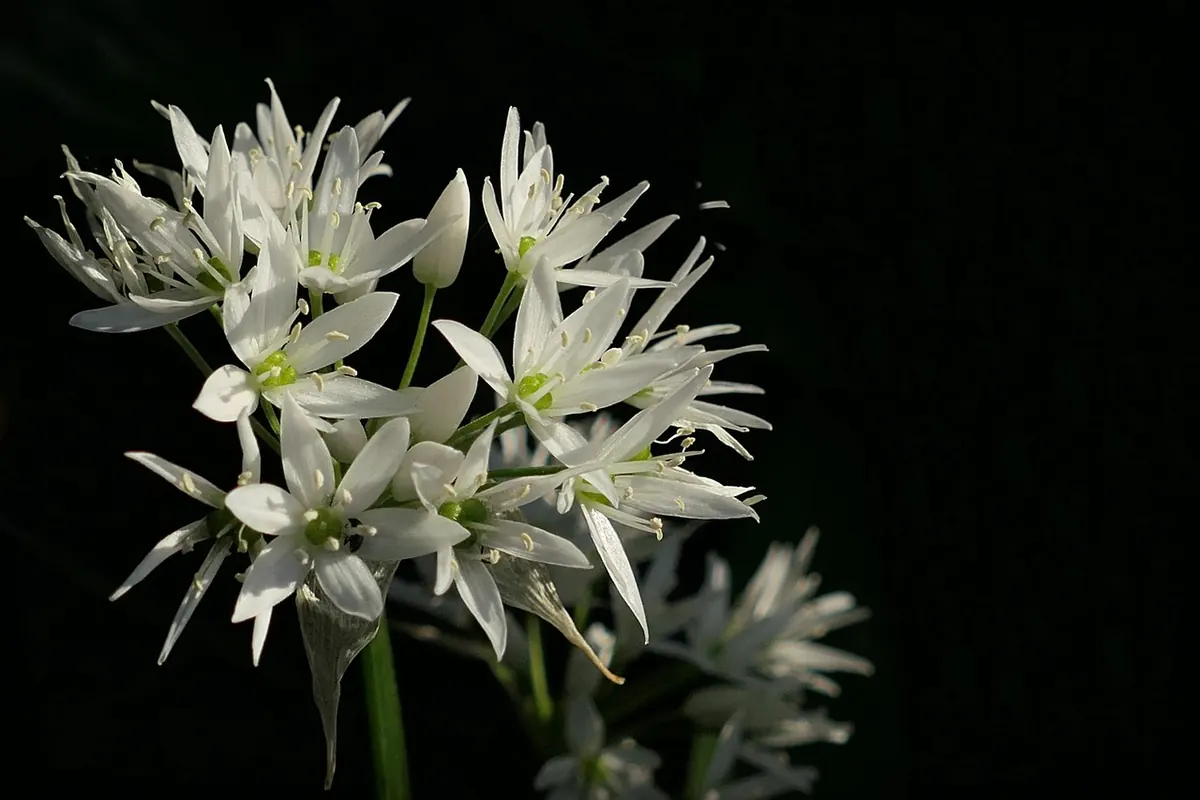
Wild garlic leaves are broad, soft and lance-shaped, tapering to a pointed tip. They are usually bright green, matt rather than glossy, and can be 10–25cm long. Each plant grows two or three leaves from a bulb, often forming dense carpets. The edges are smooth, not toothed, and the leaf is usually folded along a distinct central vein, giving it a slightly creased look. Young leaves can be narrower and more upright, which is where confusion creeps in. The stem is slender and green, and the flowers — when they appear — are white, star-like and held in a loose cluster on a triangular stem.
Dangerous lookalikes to know
Several plants share the same woodland floor, and some are seriously toxic. Compare the whole plant, not just a leaf.
- Lily of the valley (Convallaria majalis): Leaves are broad and oval, often glossy, with strong parallel veins. They usually grow in pairs from a creeping root, not from a bulb. There is no garlic smell. In late spring, white bell-shaped flowers hang along one side of a slender stem. All parts contain cardiac glycosides and are toxic. If someone has swallowed it, seek urgent medical advice.
- Autumn crocus (Colchicum autumnale): In spring, its leaves are strap-like, glossy and dark green, often in clumps. They have no garlic smell. The crocus-like flowers appear in autumn, not spring. The plant contains colchicine and is highly toxic.
- Lords-and-ladies (Arum maculatum): Leaves are arrow-shaped, often with purple-black spots, and glossy. They have no garlic smell. The plant is toxic and can cause irritation to the mouth and throat.
- Dog's mercury (Mercurialis perennis): Leaves grow in opposite pairs, are oval and toothed, and form green carpets in shade. No garlic smell. Toxic.
- Bluebell leaves: Narrow, strap-like and glossy, emerging in spring. No garlic smell. The bulbs are toxic.
The most common mistake is to pick a mixed handful and rely on the garlic leaves to overpower the rest. A single lily of the valley leaf will not be neutralised by cooking. In fact, cooking does not make toxic lookalikes safe. Keep your harvest clean and separate, and if you cannot identify every leaf in your basket, throw the lot away. If you suspect anyone has eaten a toxic plant, contact emergency services or a poisons service immediately.
A step-by-step identification routine
- Choose a patch you can see clearly. Avoid roadsides, dog-fouled areas, and places where spraying may have occurred.
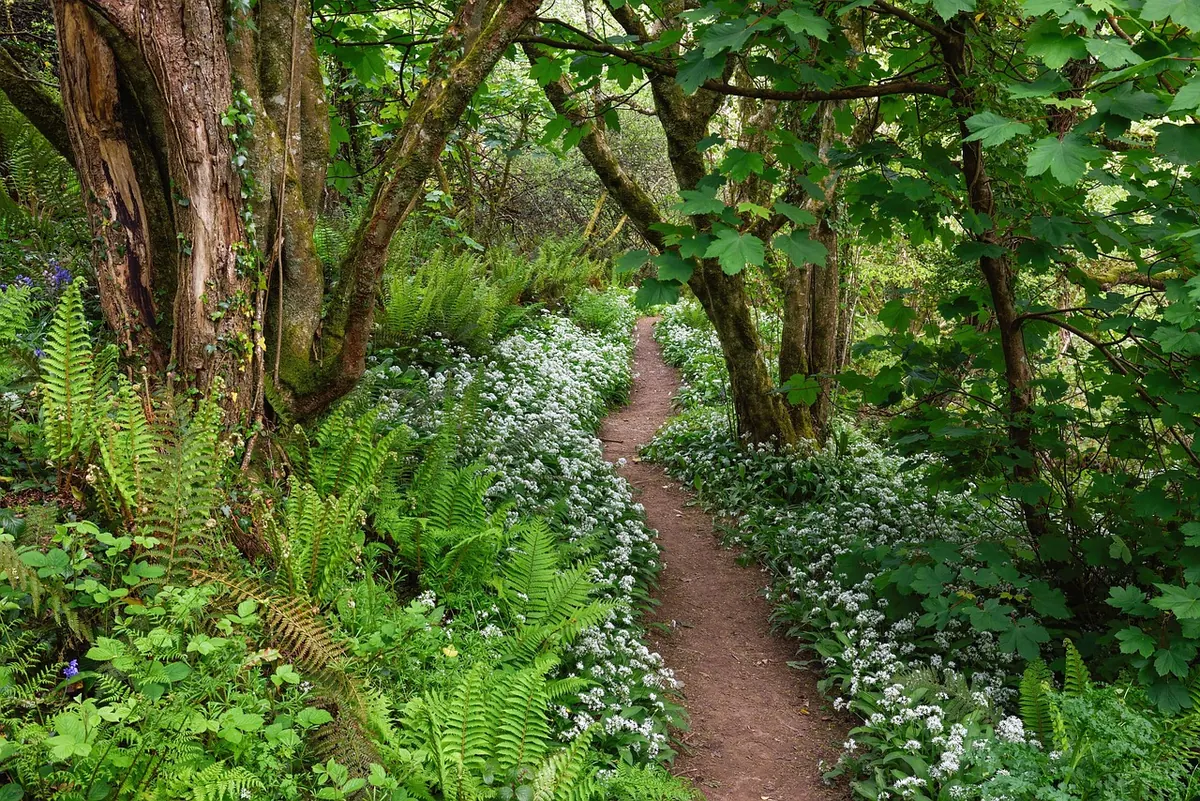
- Check the habitat: damp, shaded woodland, often near streams or under deciduous trees. Wild garlic often grows in broad, dense patches.
- Look at the leaves: broad, soft, pointed, matt green, smooth edges. No spots, no glossy shine, no opposite pairs.
- Crush a leaf. It should smell unmistakably of garlic or onion. If not, stop.
- Look for flowers if present: white stars in a loose umbel, on a triangular stem. Lily of the valley has bells; autumn crocus has no spring flowers.
- If any detail is wrong, leave it. There is always another patch, another day.
Harvesting without harming the patch
Sustainable picking is simple: take leaves, not bulbs. Use scissors or a sharp knife to snip one leaf from each plant, leaving at least one or two behind to photosynthesise. Never pull up the bulb; that kills the plant and damages the patch for years. Take only what you will use in a few days. Leave flowers to set seed, and avoid walking through the middle of a colony — compacted soil and broken stems can set it back. Rules vary. You should always have the landowner's permission, and some nature reserves and protected areas prohibit picking altogether. Check before you pick.
Using and storing wild garlic
Wild garlic is best used fresh. Wash leaves thoroughly in cold water, dry them, and use within a few days. They make a vibrant pesto, a gentle soup, or a flavoured butter. Cooking softens the flavour; raw leaves are sharper. If you freeze, blanch or chop and freeze in oil. Remember that the garlic smell is your safety check — if a leaf in your bag does not smell right, remove it and check the rest.
A forager's checklist
- Smell: garlic or onion, always.
- Leaves: broad, soft, pointed, matt, smooth edges.
- Arrangement: two or three from a bulb, not opposite pairs.
- Flowers: white stars on a triangular stem, not bells.
- If in doubt: leave it.
- Harvest: leaves only, one per plant, leave plenty.
- Permission: landowner and local rules.
- Safety: wash, keep separate, never eat a mixed bag you cannot identify.
Photo: flamencomark / Pixabay
Growing Wild Edibles in a Small Kitchen Garden: Wild Garlic, Sorrel and Land Cress
Wild garlic, sorrel and land cress all thrive in shade and in pots. Here's how to sow, grow and harvest...
Herbal Teas from the Hedgerow: Safe Recipes for Nettle, Mint and Chamomile
A practical beginner's guide to picking, drying and blending nettle, mint and chamomile from British...
About Us