The House Always Wins? Not If You Understand Variance
Every gambler remembers the night the math broke. The slot that paid out three jackpots in an hour. The 40-to-1 underdog that somehow won. The poker hand that made no sense. These moments feel like proof that luck can be bent, that the casino's edge is negotiable if you just find the right machine or table. It's a comforting story. It's also the single most expensive misunderstanding in gambling.
Variance doesn't care about your story. It's the statistical noise that surrounds every long-term average, and it behaves exactly as the math predicts over enough hands, spins, or bets. The problem is that most players never see "enough." They see a weekend. A session. A hot streak. So let's talk about what the numbers actually say, and why the smartest players in the room are the ones who stopped trying to fight them.
Why the Expectation Never Changes, No Matter How You Feel
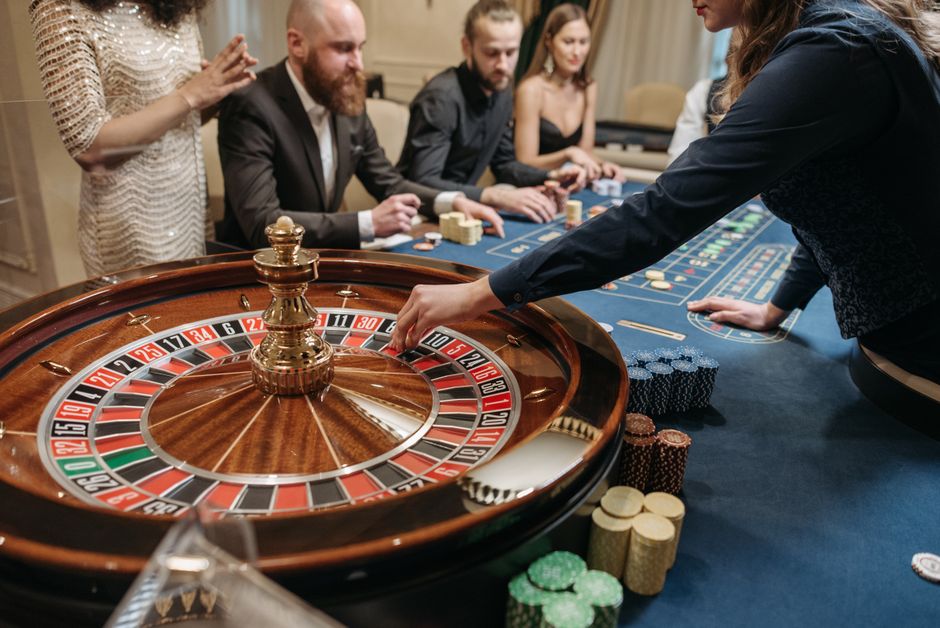
Here's a number worth tattooing on your brain: 5.26%. That's the house edge on a double-zero roulette wheel. It means that for every $100 you wager over the long run, you should expect to lose $5.26. Not every spin. Not every session. Over the long run.
The digital age has arguably made casino games fairer in the sense that RNGs have removed dealer manipulation, but that has done nothing to change the built-in edge. A slot machine with a 96% RTP will return $96 for every $100 wagered across millions of spins. Your individual session is a tiny sample floating somewhere inside that distribution. Some players hit 200% returns. Some hit 20%. Both are folded into the same 96% figure. For practical tips, check out mahjong slot.
This is where gambler's fallacy does its damage. After eight reds in a row on roulette, the table feels due for black. It isn't. The wheel has no memory. Each spin is an independent event with identical odds, and the previous eight results have as much influence on the next one as the weather in a different city. The only thing that changes is the player's psychology, which is exactly what the house is counting on.
The Variance Curve: Where Bankrolls Actually Die
Variance is not just academic. It is the reason two players with identical strategy, identical bankroll, and identical skill can walk away with completely different results. Consider a slot player with a $500 bankroll on a machine with 96% RTP and high volatility. Sessions like this can swing 50% or more in either direction before the RTP catches up—and for many casual players, a single bad swing is enough to end the night.
A few concrete points to internalize:
- Volatility is not the same as house edge. A low-volatility game grinds your bankroll down slowly. A high-volatility game can wipe it out in twenty minutes or triple it in five. Neither is "better"—they serve different bankroll sizes and risk appetites.
- Sample size is brutal. To have a 95% confidence that your observed RTP on a slot is within 2% of the true RTP, you may need hundreds of thousands of spins. Nobody plays that long. So you are always operating on incomplete information.
- Short-term results are noise. A winning weekend tells you almost nothing about whether a strategy works. It tells you variance went your way.
Bankroll management is the only real defense. If you play a high-volatility slot, you need a bankroll that can absorb 300+ spins without going bust, because the math guarantees long dry spells. Play with money you can lose, and set a stop-loss before you sit down, not after you've already lost half of it.
Poker Is Different—But Not in the Way Most Players Think
Poker is the one game in the casino where skill measurably shifts the expected value. A strong player can genuinely beat a weaker table over time. But "over time" is doing a lot of work in that sentence, and the variance in poker is savage.
Even a player with a 5bb/100 win rate—a solid, respectable figure—can go on a downswing of 50,000 hands. That's not a bad player getting punished. That's a winning player experiencing the normal shape of the distribution. This is why professional poker players obsess over bankroll requirements (often 50–100 buy-ins for cash games) and why so many talented amateurs quit during what is essentially a statistically unremarkable cold streak.
The edge in poker comes from three places, in order of importance:
- Game selection. Sitting in a soft game with recreational players beats playing brilliantly in a tough game. Every time.
- Position and aggression. Acting last and betting with purpose wins more pots than fancy plays.
- Emotional control. Tilt destroys more bankrolls than bad beats do. A player who can fold a losing session and walk away has a genuine edge most opponents lack.
Note what isn't on the list: reading tells, fancy bluffs, or memorizing charts. Those matter, but only after the fundamentals are locked in.
The Psychology of "Almost Winning"
Modern slot design leans hard into near-miss psychology. A jackpot symbol landing one reel short triggers the same dopamine pathway as an actual win, even though the payout is zero. That's not an accident. It's engineering.
Cognitive distortions show up everywhere in gambling, and naming them is the first step to resisting them:
- Illusion of control: Choosing your own lottery numbers or pressing the slot button a certain way changes nothing. RNGs don't respond to rhythm.
- Recency bias: Recent wins feel more predictive than the base rate. They aren't.
- Sunk cost fallacy: "I've lost $300, I can't stop now." Yes, you can. The $300 is gone regardless of what you do next.
- Confirmation bias: You remember the wins vividly and forget the losses. Keep a genuine log for one month and the pattern becomes uncomfortable.
The house doesn't need to cheat. It just needs you to keep playing. Every cognitive bias above increases the number of bets you place, and every bet carries the edge.
Odds Shopping and Bonuses: The Real Edge for Bettors
Sports betting is where sharp players actually find an edge—not by predicting outcomes better than the market, but by exploiting price differences. If Bookmaker A offers +105 on a team and Bookmaker B offers +115 on the same team, the sharp bettor takes the +115. Over hundreds of bets, that 10-cent difference compounds into a meaningful return.
Bonuses work the same way, but only if you read the terms. A 100% deposit bonus with a 40x wagering requirement attached to slots (which contribute 100% to the requirement) is not the same as one attached to table games (often 10–20% contribution). Do the math before you claim anything. A bonus that looks generous can be mathematically impossible to clear.
The Takeaway That Actually Matters
Gambling is entertainment with a built-in cost, not an investment strategy. The people who enjoy it most over the long run are the ones who accept that premise going in. They set a budget, treat losses as the price of the experience, and walk away when the budget is done—regardless of whether they're up or down.
The math doesn't care about your instincts, your lucky charm, or your gut feeling about the next spin. It only cares about the number of bets and the edge on each one. Understand that, and you can enjoy the games without being quietly harvested by them. The house always wins in the long run. Your job is to make sure that long run isn't yours.

Growing Wild Edibles in a Small Kitchen Garden: Wild Garlic, Sorrel and Land Cress
Wild garlic, sorrel and land cress all thrive in shade and in pots. Here's how to sow, grow and harvest...

Herbal Teas from the Hedgerow: Safe Recipes for Nettle, Mint and Chamomile
A practical beginner's guide to picking, drying and blending nettle, mint and chamomile from British...
About Us